GEO: Generative Engine Optimization | Complete Guide 2026
The digital landscape is undergoing a massive transformation. As AI-powered search engines and conversational interfaces become the primary way users discover information, traditional SEO strategies are no longer sufficient. Generative Engine Optimization (GEO) represents the next evolution in digital marketing—a discipline focused on optimizing content for AI systems that generate responses rather than serving traditional blue-link results. If you want your brand to remain visible in this new paradigm, understanding GEO is essential for 2026 and beyond.
What Is Generative Engine Optimization?
Generative Engine Optimization refers to the practice of optimizing digital content so that AI models recognize, understand, and reference it when generating responses to user queries. Unlike conventional SEO, which targets ranking algorithms to appear in search result pages, GEO targets the AI systems themselves—the large language models (LLMs) and generative search engines that synthesize information from multiple sources.
When someone asks an AI assistant a question, the system draws from its training data and real-time sources to craft a response. GEO ensures your content becomes a trusted source that AI models cite, reference, or incorporate into their generated answers.
Why GEO Matters More Than Traditional SEO Now
The shift toward AI-first search experiences has been dramatic. Major tech companies have integrated generative AI into their search platforms, and users increasingly ask complex questions expecting comprehensive, conversational answers rather than a list of website links.
Key differences between SEO and GEO:
- Traditional SEO focuses on keywords, backlinks, and technical optimization for ranking algorithms
- GEO focuses on content clarity, source authority, structured data, and semantic relevance for AI comprehension
- SEO aims for position #1 in search results; GEO aims for your content to be cited or referenced in AI-generated responses
Brands that master GEO gain significant advantages: increased brand mentions in AI responses, greater visibility in emerging search interfaces, and stronger authority in their respective industries.
How Generative AI Search Engines Work
Understanding the mechanics behind AI search helps you optimize more effectively. Generative search engines operate through several stages:
1. Query Understanding
AI models analyze the user's intent, breaking down complex queries into digestible components. They consider context, previous interactions, and the specific phrasing of the question.
2. Information Retrieval
The system searches its training data and connected databases for relevant information. It identifies authoritative sources that contain accurate, comprehensive information matching the query.
3. Response Generation
The AI synthesizes information from multiple sources, creating a coherent response that addresses the user's question. Sources are often cited implicitly or explicitly, depending on the platform.
4. Continuous Learning
AI models continuously update their understanding based on new data, user feedback, and emerging content patterns.
Core Strategies for GEO Success in 2026
Implementing effective GEO requires a strategic approach that combines content excellence with technical optimization. Here are the essential tactics:
Create Authoritative, Source-Worthy Content
AI models prefer content that demonstrates expertise, accuracy, and comprehensiveness. Your content should:
- Provide definitive answers to common questions in your niche
- Include data, statistics, and verifiable facts
- Show clear expertise and author credentials
- Maintain factual accuracy and avoid speculation presented as fact
Structure Content for AI Comprehension
Structured content performs better in GEO because AI systems can parse and reference it more easily:
- Use clear headings (H1, H2, H3) to organize information hierarchically
- Implement schema markup to provide explicit context
- Create FAQ sections targeting common user queries
- Use bullet points and numbered lists for scannable information
- Include clear definitions and explanations of key terms
Build Entity Authority
AI search engines think in terms of entities—people, places, organizations, and concepts—rather than just keywords. Strengthen your entity authority by:
- Establishing a strong knowledge base on your website
- Getting mentioned and cited by recognized industry publications
- Creating comprehensive profiles across authoritative platforms
- Maintaining consistent information across all digital touchpoints
Optimize for Conversational Queries
Users increasingly interact with AI through natural, conversational language. Optimize your content for:
- Long-tail, question-based queries
- Conversational phrasing and natural language patterns
- Voice search optimization
- Multi-part questions that require nuanced responses
Essential GEO Optimization Techniques
Technical Foundations
Your technical infrastructure matters significantly for GEO:
- Implement structured data markup using Schema.org vocabulary
- Ensure fast page load speeds and mobile optimization
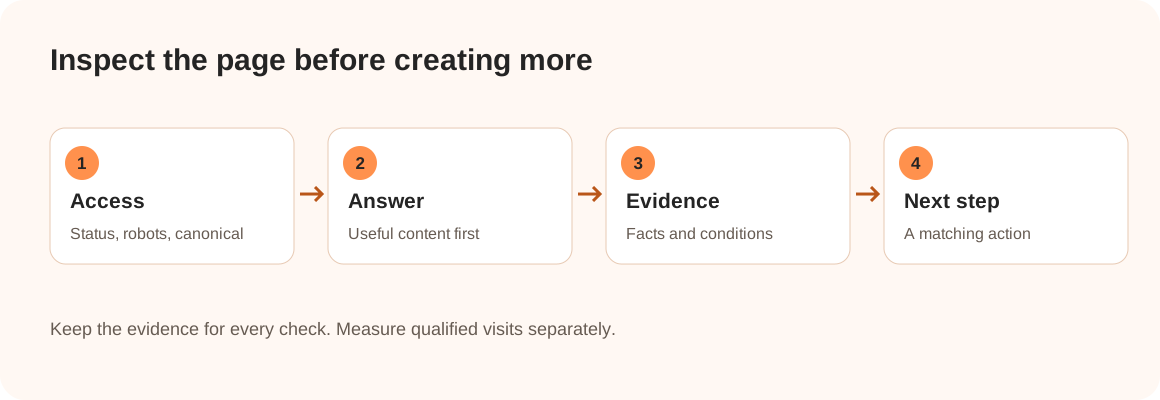
- Create comprehensive XML sitemaps that AI crawlers can access
- Use canonical tags to prevent duplicate content issues
Content Formatting Best Practices
Proper formatting signals quality to AI systems:
- Write concise, well-organized paragraphs (3-5 sentences each)
- Use bold text to emphasize key concepts and terms
- Include relevant examples and case studies
- Update content regularly to maintain accuracy and freshness
- Add visual elements like diagrams and charts where appropriate
Citation and Reference Optimization
Make your content easy to cite:
- Include clear, quotable statements that AI can extract
- Provide source attribution when referencing external data
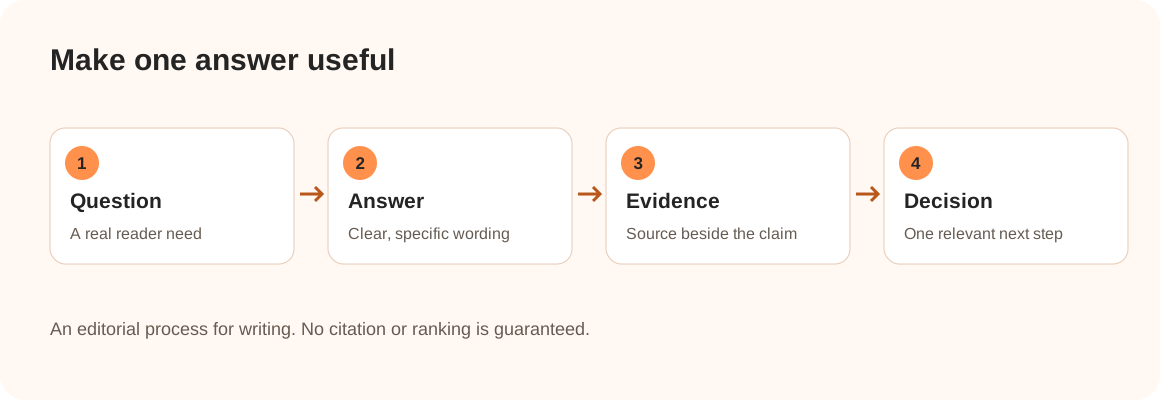
- Create "answer-first" content that leads with the conclusion
- Include attribution links and reference sections
Measuring GEO Performance
Tracking your GEO success requires new metrics and methodologies:
Key Metrics to Monitor
- AI citation frequency: How often your brand appears in AI-generated responses
- Entity recognition: Whether AI systems correctly identify your brand and offerings
- Zero-click visibility: Presence in generated responses before users click through
- Answer box inclusion: Featured status in AI-generated answer sections
Tools for GEO Analytics
Several emerging tools help track GEO performance:
- AI visibility monitoring platforms
- Brand mention tracking services
- SERP analysis tools with AI response tracking
- Content performance analytics with AI attribution
The Future of GEO
Generative Engine Optimization is not a passing trend—it represents a fundamental shift in how information is discovered and consumed online. As AI capabilities continue advancing, GEO will become increasingly critical for digital presence.
Predictions for coming years include:
- Greater integration between traditional search and AI-generated responses
- More sophisticated citation tracking and attribution systems
- Evolution of content formats specifically designed for AI consumption
- Increased importance of real-time content updates and accuracy
Brands that invest in GEO now will build sustainable competitive advantages as this transformation accelerates.
Frequently Asked Questions
What is the difference between GEO and traditional SEO?
Traditional SEO optimizes content for ranking algorithms that display links in search results. GEO optimizes content for AI systems that generate conversational responses. While SEO focuses on keywords and backlinks, GEO emphasizes content authority, semantic clarity, and structure that AI models can easily comprehend and cite.
How long does it take to see GEO results?
GEO results typically emerge over several months as AI systems index and incorporate your optimized content. Unlike traditional SEO, where ranking changes can happen quickly, GEO impact builds gradually as your content gains recognition as an authoritative source for AI-generated responses.
Is GEO replacing SEO?
No—GEO complements rather than replaces traditional SEO. Both disciplines matter because users still use conventional search alongside AI interfaces. A comprehensive digital strategy should address both ranking optimization and AI source optimization.
Do I need technical skills for GEO?
Basic GEO implementation requires understanding content structure and schema markup. While technical skills help with advanced implementations, anyone can improve their GEO performance by focusing on content quality, clarity, and proper formatting.
Can small businesses benefit from GEO?
Absolutely. GEO levels the playing field by emphasizing content authority over domain authority. Small businesses with highly relevant, accurate, and well-structured content can achieve significant visibility in AI-generated responses.
How often should I update content for GEO?
Review and update your content regularly—ideally quarterly—to ensure accuracy and completeness. AI models favor fresh, current information, and regular updates signal that your content remains authoritative and well-maintained.
The transition to AI-driven search represents both a challenge and an opportunity. By understanding Generative Engine Optimization and implementing these strategies, you position your brand for success in the evolving digital landscape of 2026 and beyond.
Ready to master the skills you need for this new era of digital marketing? Explore our comprehensive AI Courses to learn practical strategies for succeeding with AI-powered platforms and search technologies. For immediate guidance, check out our Free AI Tutorials to start optimizing your content today.
Start Learning Free