Sora looked like magic in the February 2024 demonstration: type a sentence, get up to 60 seconds of plausible video. For a few weeks, it felt as though the hardest part of filmmaking — the shooting — had been compressed into a text box. The gap between that demonstration and a product people would pay for every day turned out to be wider than the hype allowed.
OpenAI's move in March 2026 is best read as a product shutdown, not a verdict on the whole category. The Sora app is going away. AI video generation is not. If you make ads, lessons, explainers, or client drafts, you still have working options — you need a stricter brief, a realistic sense of what these tools do well, and a save plan for anything you made in Sora.
Timeline — what actually happened
| Date | Event |
|---|
| Dec 11, 2025 | OpenAI and Disney announce a planned tie-up reported around $1B, including character licensing for Sora. Reported as planned, not closed. |
| Mar 24, 2026 | OpenAI confirms it will shut down Sora, reported by The New York Times on Mar 24, 2026. |
| Apr 26, 2026 | Sora web and mobile apps discontinued, per OpenAI Help Center article 20001152. |
| Sept 24, 2026 | Sora API discontinuation date, per the same Help Center. If you still store videos in Sora or call the Sora API, act before that date. |
No action is needed to keep reading TakeAICourse. Action is needed only if you have Sora files or API code.
About that $1B Disney plan
The prior version of this article called it a cancelled $1B agreement. That overstated what happened. Reporting in March 2026 noted no money changed hands and no definitive agreement closed. In plain terms: a planned $1B investment and licensing plan ended with Sora; it was not a paid contract that was refunded.
That distinction matters because the Disney name was the credibility signal of the whole story. A household-name studio putting its characters into a generative video tool would have meant the technology had crossed from demo into production. What the primary reporting supports is narrower: the plan was announced, and the plan ended when Sora ended. Anything beyond that — who was dissatisfied, what the internal quality reviews said — is speculation we will not repeat here.
Why the app did not survive
Demonstrations hid three product problems, and each of them compounds the others.
First, latency and unit cost made consumer pricing hard. Generating video frame by frame is far more expensive than generating text, and a subscription price that feels normal for a chatbot does not cover it. Second, frame-to-frame consistency kept breaking in ways viewers notice instantly: objects disappearing between cuts, physics bending in the middle of a shot, faces shifting from one second to the next. A demo clip can be cherry-picked; a product has to survive the tenth generation, not just the best one. Third, the workflow never fit how studios actually work. Professional video is revision, versioning, precise control over a timeline — not a single prompt rolled like dice until something usable appears.
Sources familiar with the project described scale-up as commercially unviable, and experts had warned well before the shutdown that the research demo was not production-ready. We do not repeat per-second cost or GPU-hour figures here because no primary calculation was available to support them, and a precise-sounding number without a source is worse than no number at all.
What did not end: the market
AI video did not end with Sora — the earlier version of this article already listed the continuers, and they are still shipping. Runway ML's Gen-3 handles stable text-to-clip work, Pika Labs focuses on assisted editing, Kling AI keeps expanding fast, Google DeepMind's Veo generates high-fidelity footage, Meta is accelerating Movie Gen, and open-source work continues from Stability AI. That section of the old article pointed in the right direction; only the framing was wrong. These tools did not "win because Sora lost." They survived because they were built around narrower jobs with tighter briefs.
For Latin America, the interest signals are real but should be read as signals, not as a boom already underway. The Brazilian Startup Association registered 47% more applications in generative AI programs in 2024 compared to 2023, and internal pilots such as iFood and Nubank show large Brazilian companies testing AI-assisted video for service and marketing work. Mexico remains a natural hub for Spanish-language audiovisual production. Firms in Colombia and Argentina mentioned in earlier coverage remain evaluating — that verb matters, and we keep it.
What to use instead — by job
The practical question was never which tool "replaces Sora." It is which tool fits the specific shot you need this week. Start from the job, not the logo.
For a marketing draft in hours: use Runway or Pika for text-to-clip, then finish in your normal editor. Generate B-roll only, not the final cut. The generated footage fills gaps between real shots; it does not carry the message on its own.
For a product explainer with a face on camera: record once and use editing assist for cleanup rather than full generation, to keep identity consistent. Faces are exactly where generative video still stumbles, so keep the human real and let the tool handle noise, pacing, and captions.
For a classroom or training clip: write a 3-shot script first — hook, demo, recap — then generate only the shots you cannot film. A whiteboard diagram you cannot draw is a good candidate; your own introduction is not.
For developers: migrate off the Sora API before Sept 24, 2026. Test one Veo, Runway, or Kling endpoint with the same prompt and compare cost per second before switching staging. Run the same prompt three times and score clarity and stability, not just the best frame.
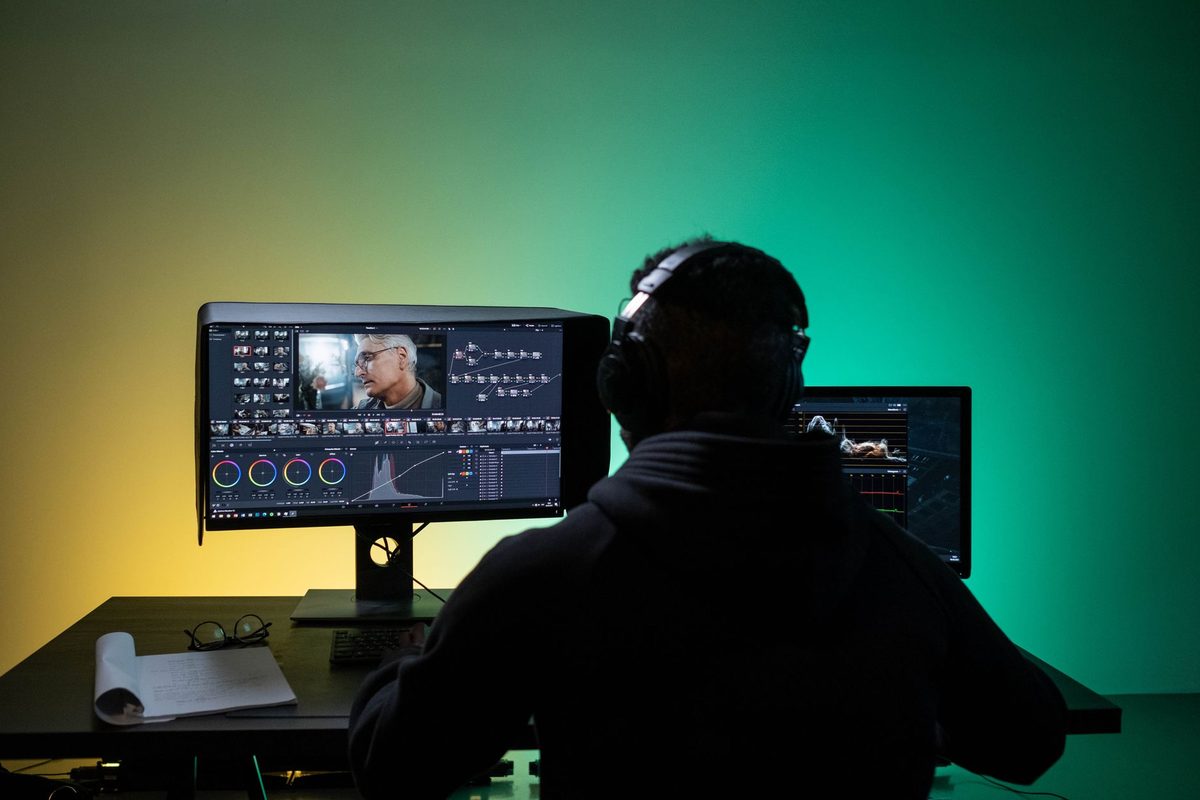
Generated footage still gets finished at a real editing desk. Photo by Ron Lach on Pexels.
Reusable starter you can adapt in our Prompt library:
6-second B-roll, [subject + action], [composition/viewpoint], soft daylight, static background, no text, no logos, no extra fingers. Negative: morphing, flicker, watermark.
If you made anything in Sora — save it now
If your work lives inside Sora, treat the shutdown as a deadline, not a rumor. Open your Sora library on web while access remains. Download originals, not previews — previews compress away the quality you might need later. Keep filename, date, and prompt together in the same folder, so a clip remains findable a year from now. Copy the prompts you want to reuse into a document, because you will need them to recreate shots in whichever tool comes next. If you built on the API, freeze new calls, log your usage, and switch staging to the replacement endpoint before Sept 24, 2026.

Review what you saved with the people who will reuse it. Photo by Andrea Piacquadio on Pexels.
What to expect next
Expect consolidation around a few global providers, B2B-first use cases with narrow briefs, more European rules on deepfakes and likeness, hybrid language-plus-diffusion pipelines, and regional versions tuned for language and culture. OpenAI, for its part, refocuses on the language products that already monetize.
For readers in Latin America, the message is practical rather than dramatic: the era of click-generated AI video has not arrived yet, and the tools available today should be evaluated against the job in front of you — with a small test, a measured result, and no long-term bet on any single vendor.
Continue with the Guide hub, the Prompt library, or a structured course only when it matches the work you need to complete. If video briefs are part of your job, Learn AI in 30 Days applies the same test-before-you-commit thinking to your own AI skills, and the full course catalog covers the foundations. Browse prompt packs for ready-made sets, and check pricing only when you are ready to commit.
Sources with dates: OpenAI Help Center article 20001152 — web/app discontinued Apr 26, 2026, API ends Sept 24, 2026; The New York Times shutdown report, Mar 24, 2026; Ars Technica, Mar 2026, on the Disney $1B plan never closing; The Verge analysis of Sora and its competition; Grand View Research market sizing, 2024 base; Brazilian Startup Association 2024 application data; Goldman Sachs AI Report 2024. Market data as of Nov 2024 — dated.
